
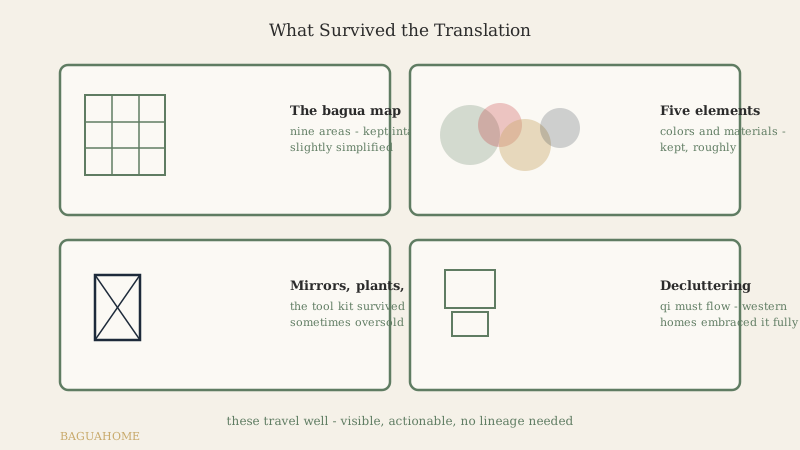
The short version: Western feng shui kept the vocabulary and simplified the method; classical practice kept the method. Knowing the difference protects you from lucky-toothbrush feng shui.
What Survived the Translation
In the 1980s, feng shui crossed into American culture and was simplified for a market that wanted answers without the study: the Black Hat school dropped the compass entirely, cures became retail objects, and the Bagua Map became a fixed template rather than an orientation tool.
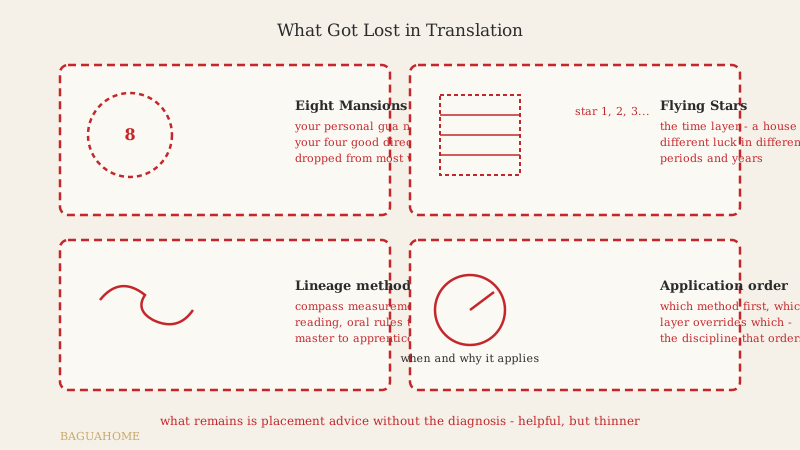
What Got Lost
Direction: classical practice starts from your homes compass reading and your personal energy number (Kua) – the same layout is good for one person and draining for another. Time: Flying Stars tracks how room energies shift in 20-year cycles – a frozen template cannot. Priority: the classical order is form first, direction second, cures last.
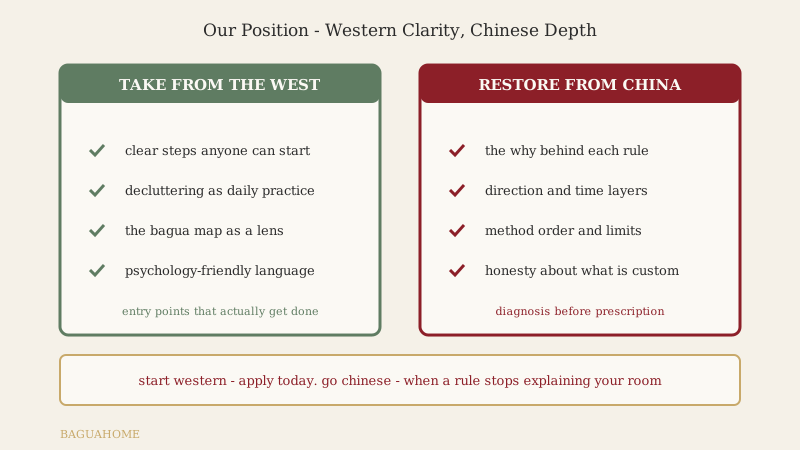
Our Position
We are not purists who dismiss everything Western – the psychological insights are real and useful. Our approach: use the classical engine, translate it into modern, actionable steps, and always explain the why.